What Is The Marlborough Wine Region Known For?
Marlborough is New Zealand's largest wine region, famous for Sauvignon Blanc. Here is what the region is known for, its subregions, history and how to tour it.
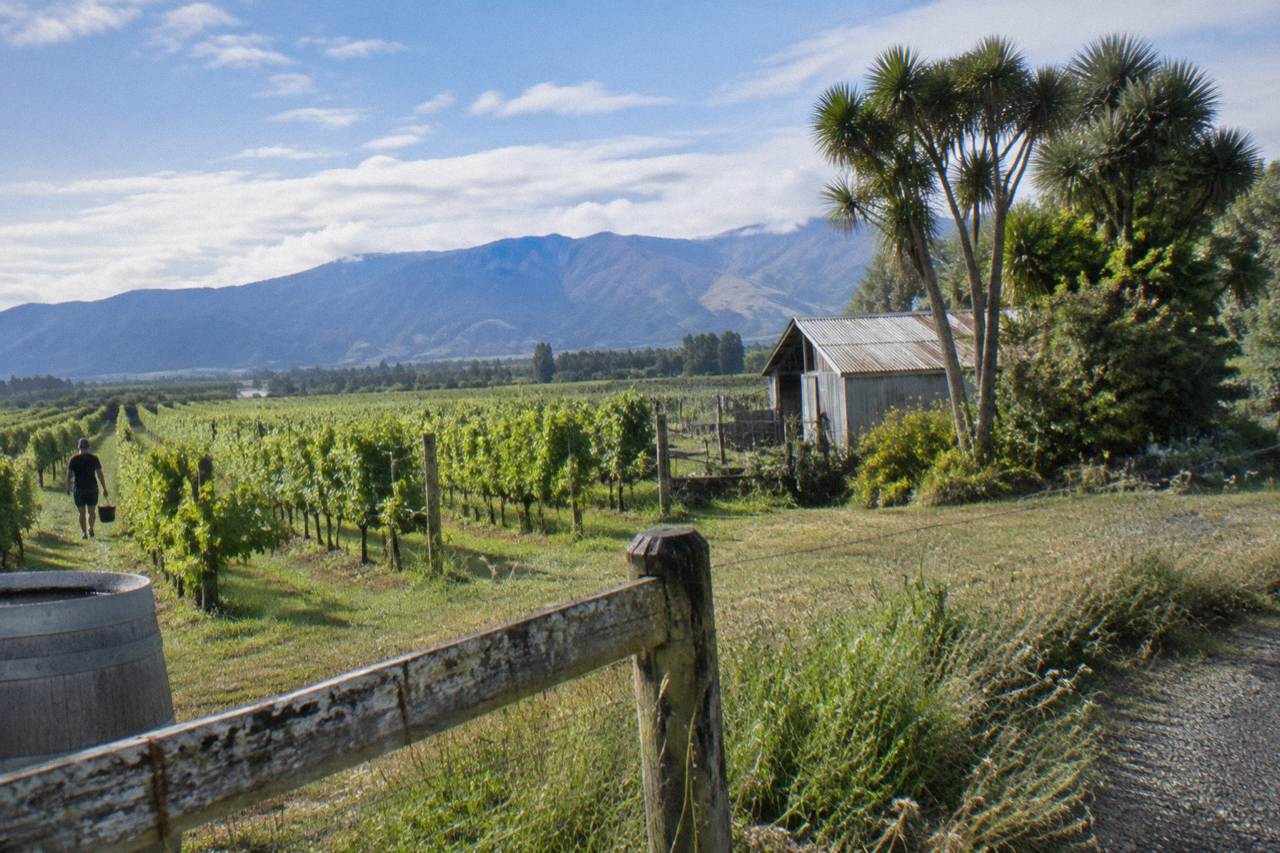
Marlborough is known for Sauvignon Blanc above everything else. Sauvignon Blanc fills 85 percent of its plantings. With about 32,000 hectares of vines, 73 percent of New Zealand's vineyard area, it is the country's dominant wine region by a wide margin.
That dominance is recent. Commercial planting began in 1973 at Brancott Estate, and as late as 1985 the whole region had just four wine companies. What followed is one of the fastest regional expansions in the wine world: vines spread across the Wairau Valley floor, then into the Southern Valleys and south into the Awatere. More than 80 percent of Marlborough wine is exported, which tells you where most of it goes: overseas.
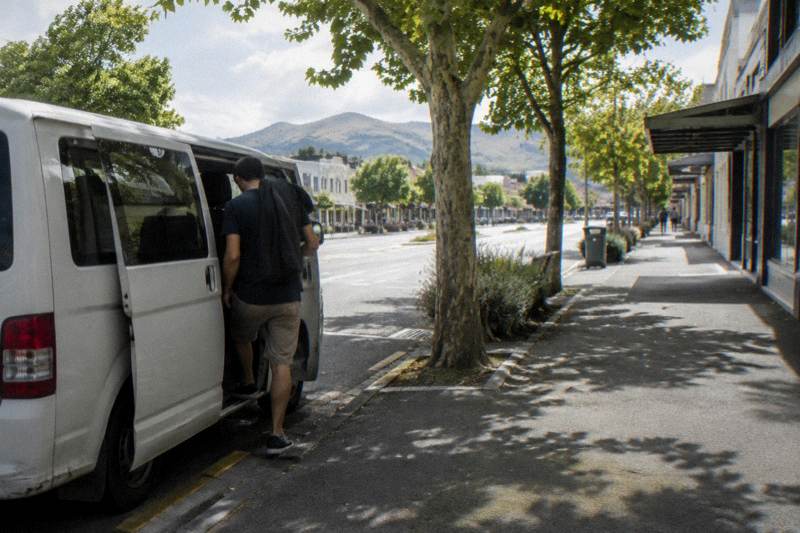
The second thing the region is known for is concentration. Almost everything worth tasting sits within a short drive of Blenheim, the region's main town, with Renwick at the centre of the cellar-door belt and Picton a short drive away on State Highway 1 for visitors arriving by ferry from Wellington, a sailing of about 3.5 hours. That geography is why wine touring here works so well: dozens of cellar doors and a tour industry that has grown up specifically to move visitors between them without anyone needing to drive after tasting. If you are weighing up the options, whether a Marlborough wine tour is worth it depends mostly on how many cellar doors you want to reach in a day.
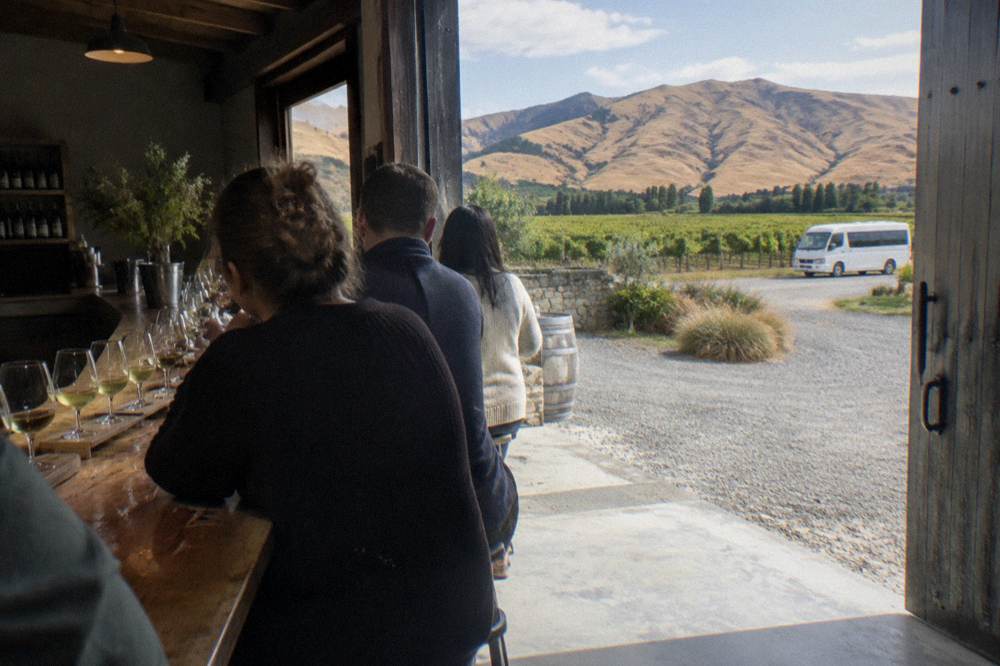
Third, the region is known for the subregional story underneath the headline grape. Wine Marlborough divides the region into Wairau Valley, Southern Valleys and Awatere. Longer tours covered here include the Full-Day Marlborough Wine Tour from Blenheim (7 hours, from $218.39 per person), the Winemakers Tour (6 hours 30 minutes, from $143.68) and the half-day Taste the Valley (5 hours, from $109.20).
A closer look at those tours explains much of the price gap. The Full-Day Marlborough Wine Tour from Blenheim is run by Marlborough Tour Company, and its price covers wine tastings, a two-course lunch, transport by air-conditioned minivan and local taxes. The Winemakers Tour is run by Hop n Grape Tours: wine tastings are included in the price, groups are capped at 11, and free door-to-door collection and drop off covers the Blenheim and Renwick areas. It includes a vineyard lunch stop, though lunch is at your own cost. Both operators allow free cancellation up to 24 hours before the start.
For a shorter day, Discovery Wine Tours runs the Marlborough Afternoon Wine Tour & Vineyard Experience, 4 hours from $117.82 per person with groups capped at 13. Wine tastings are included, collection is from your accommodation in Central Blenheim, and you get a tour host with a passion for wine and Marlborough local history. Free cancellation applies up to 24 hours before the start here as well.
- Bike And Self-Guided$39
- Half-Day Wine Tours$109
- Picton And Cruise-Ship$114.37
- Full-Day Wine Tours$143.68
- Private And Gourmet$336
Those three sit inside a much wider selection: 32 tours across 5 categories, with per-person from-prices from $39 to $353.45 and a median of $143.68, which happens to match the Winemakers Tour exactly. Blenheim is the start town for 22 of the 32 tours, Picton for 8 and Renwick for 2, which lines up with the geography described above.
Where Is The Marlborough Wine Region And How Is It Divided?
Marlborough sits at the top of New Zealand's South Island, between Cook Strait and the Pacific, with the wine country centred on the Wairau Valley around Blenheim and Renwick. Wine Marlborough divides it into three subregions: Wairau Valley, the largest and most planted; Southern Valleys, holding around a fifth of the vineyards; and Awatere and South Marlborough, cooler, drier and windier than anywhere else in the region.
The Wairau Valley takes its name from the braided Wairau River, and Wairau is Maori for "many waters". Central Wairau, around Rapaura and Renwick, sits on free-draining gravels. Lower Wairau is cooler and more maritime as the river approaches the sea, while Upper Wairau, pushing inland, is cooler again and more continental. A single valley, then, but with real variation inside it.
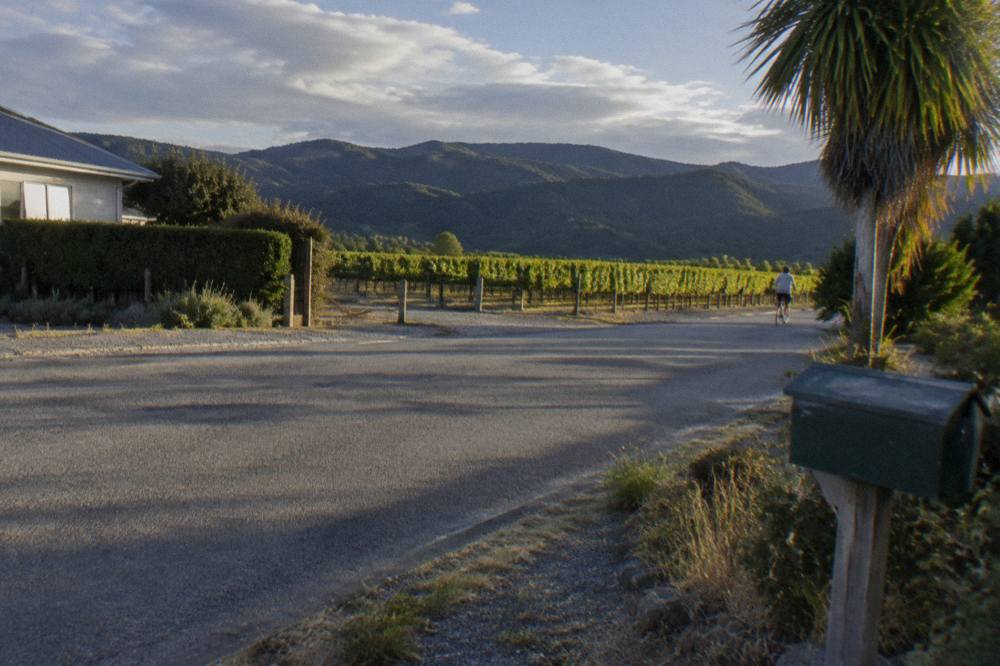
The Southern Valleys, Brancott, Omaka, Fairhall, Waihopai, Ben Morven and Taylor, sit south and west of Blenheim on more varied soils. Brancott holds particular significance: it is where those first commercial plantings went into the ground in 1973. The Awatere, further south still, lives up to its Maori name, "fast flowing stream", in climate terms: Wine Marlborough describes it as cooler, drier and windier than anywhere else in the region. The region's own guide to the Wairau, Awatere and Southern Valleys goes deeper on which wineries sit where.
| Subregion | Character (Wine Marlborough wording) | Share of vineyards |
|---|---|---|
| Wairau Valley | Largest and most planted valley, braided river, free-draining gravels in Central Wairau | Largest share |
| Southern Valleys | Around a fifth of Marlborough's vineyards, varied soils | About one fifth |
| Awatere and South Marlborough | Cooler, drier and windier than anywhere else in the region | Not stated |
No listing names a subregion, so check a tour's page for its stops. The Full-Day Marlborough Wine Tour from Blenheim runs 7 hours, and all 32 booking pages for the tours covered here state free cancellation up to 24 hours before the start for a full refund.
What Grapes Is Marlborough Known For Growing?
Sauvignon Blanc is the answer, overwhelmingly: 85 percent of Marlborough's plantings. After that come Pinot Noir at 7 percent, Pinot Gris at 4 percent and Chardonnay at 3.3 percent, according to Wine Marlborough's own figures. A handful of other varieties fills the remainder, but the region's reputation, exports and cellar-door experience are built on those four.
The Sauvignon Blanc story is the region's defining one. Many visitors arrive already knowing the name Cloudy Bay. There is more on that in what Cloudy Bay is famous for at a Marlborough winery.
Pinot Noir is the quiet second act. Seven percent of plantings sounds modest, but on 32,000 hectares it is a serious volume. Pinot Gris and Chardonnay fill out the middle of the list, and both show up regularly in cellar-door tasting flights. Visitors often arrive expecting a single-varietal region and leave surprised by the range; if that is your angle, how much wine you taste on a Marlborough wine tour shapes how much of that range you actually get through.
| Variety | Share of Marlborough plantings | Role at the tasting counter |
|---|---|---|
| Sauvignon Blanc | 85 percent | The headline grape of the region |
| Pinot Noir | 7 percent | The second most planted variety |
| Pinot Gris | 4 percent | A white poured alongside Sauvignon Blanc |
| Chardonnay | 3.3 percent | A smaller planting |
How Did Marlborough Become A Wine Region?
Marlborough's wine industry began with commercial planting at Brancott Estate in 1973, an unusually late start for a region now this size. Growth was slow at first: in 1985 the region had just four wine companies. Expansion after that point, driven by Sauvignon Blanc demand, took it to about 32,000 hectares and 73 percent of the national vineyard area.
That timeline matters to how the region feels today. Unlike European regions with centuries of layered history, Marlborough is a designed landscape: grid-planted vineyards, purpose-built wineries, cellar doors that are mostly decades old at most. What looks established from a tasting room is, by wine-region standards, young. Other pages covering the same trip are gathered on Marlborough Wine Tour.
The single decisive event was the international reception of Marlborough Sauvignon Blanc. Once critics and buyers tasted that style, demand created planting, planting created scale, and scale created the infrastructure visitors now use: the cellar-door belt around Renwick, the tour operators running out of Blenheim and Picton, and a wine-tourism economy where the most reviewed tour in the region has 482 reviews, 4.9 across them, on Beyond the Vines. Wine Marlborough's own account of the region's history is on its site at marlboroughwinenz.com for anyone wanting the primary version.
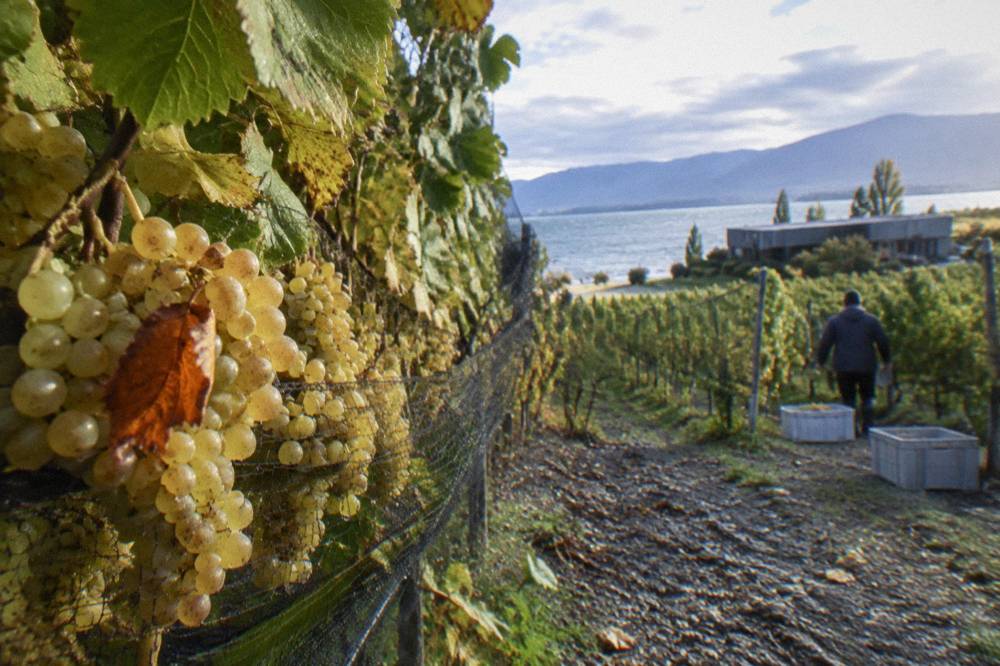
For visitors, the practical upshot of that history is a cellar-door scene built for guests rather than adapted to them. Most tasting rooms are designed for walk-in touring, and the touring industry is organised around them. The Winemakers Tour, a 6-hour-30-minute full day from Blenheim from $143.68 per person with tasting fees included across five wineries, is a good example of an operator building a whole day around that density. Jimmy's Classic Marlborough Wine Tours runs a 6-hour private version from $227.01 per person, meeting at Seymour Square in Blenheim Central, for visitors who want the same story with more room to ask questions.
What Does The Marlborough Climate Do To The Wine?
Marlborough's climate is maritime, squeezed between Cook Strait and the Pacific, with mountains sheltering the vines. Wine Marlborough's own averages are about 2,500 sunshine hours a year, 649 mm of rain, and a day-to-night temperature range of about 11 degrees in summer.
Rainfall averages 649 mm a year. None of this needs to be memorised before a tasting, but it helps to know the basics. NZ Winegrowers, the national industry body at nzwine.com, publishes the vineyard statistics behind these regional claims.
For visitors, the climate numbers translate simply: warm, bright summer days, cold evenings, and a region that is genuinely pleasant to tour in the growing season.
Can You Visit The Marlborough Wine Region Without A Car?
Yes, on a guided tour, because New Zealand's legal purchase age is 18 and the practical choices for tasting are a designated driver or a guided tour rather than a rental car. The 32 wine tours covered here start from Blenheim, Renwick and Picton, ranging from $39 per person for self-guided bike hire to $1,261 per group for a private premium tour.
The bike option deserves its reputation. Cycle routes link cellar doors around Renwick and Rapaura, and self-guided cycling tours from $39 and $40.23 per person put the whole thing together without a guide, with hotel pickup stated on both listings. The self-guided bike tour from Lorelle and Greg, rated 5.0 across 365 reviews and meeting at 10 Inkerman Street North in Renwick, even folds a shuttle into the package. Guided half-days from Blenheim start at $109 per person, and the hop-on hop-off format from Picton runs from $80.17. There is a fuller comparison in whether you can do a Marlborough wine tour without a car.
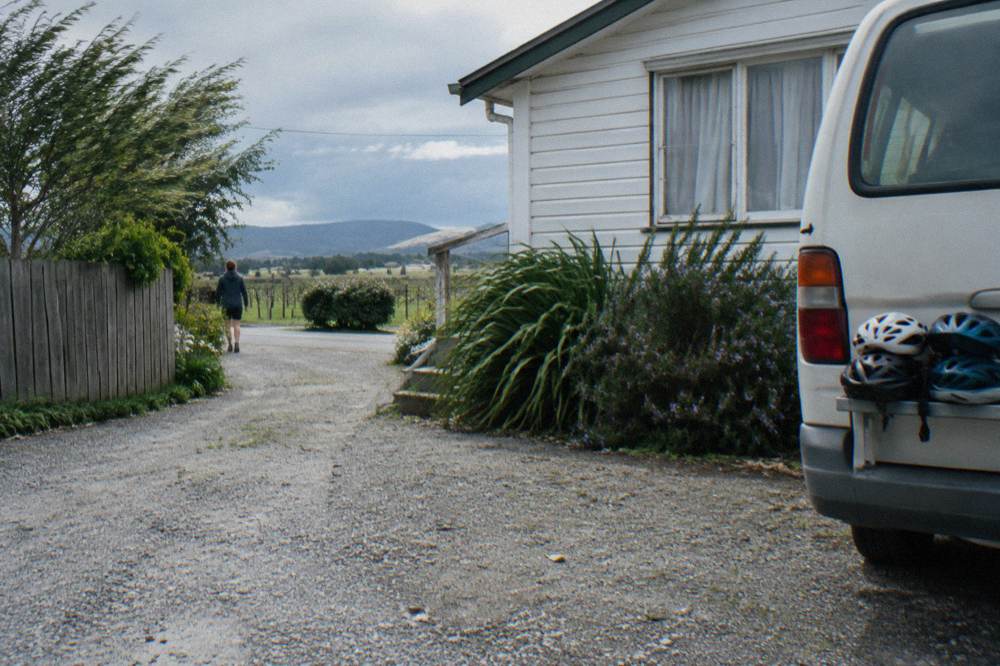
Guided small-group tours are the middle path. Beyond the Vines, the region's most reviewed tour at 4.9 across 482 reviews, runs 6 hours from Blenheim from $143.68 per person with hotel pickup, up to 11 guests, tastings included and a minimum age of 18. On the same 11-guest format, the Winemakers Tour covers five wineries in 6 hours 30 minutes. Whichever way you go, what to wear on a Marlborough wine tour matters more for the bike options than for the van options.
| Way to tour | Cheapest example | What it looks like |
|---|---|---|
| Self-guided bike | From $39 per person (bike tour, no guide) | Ride between cellar doors at your own pace |
| Hop-on hop-off | From $80.17 per person | Hop-on hop-off format starting in Picton |
| Guided half-day | From $109 per person | Van, guide, 3 to 4 wineries |
| Guided full-day | From $143.68 per person | 5 or more hours, tastings usually included |
| Private | From $1,261 per group of up to 4 | Premium tastings, your own vehicle and guide |
Every tour page for the 32 tours covered here states free cancellation up to 24 hours before the start for a full refund, which makes booking ahead a low-risk way to lock in a day.
Price comparisons get easier once you know what a from-price covers. The Winemakers Tour, run by Hop n Grape Tours from Blenheim, costs from $143.68 per person with all wine tastings, an air-conditioned vehicle and free door-to-door collection and drop off from the Blenheim and Renwick areas included. There is a vineyard lunch stop during the day, though lunch is at your own cost. That $143.68 figure is also the median per-person from-price across the 32 tours here, which run from $39 to $353.45 across the 5 categories.
Paying more can buy lunch rather than a longer day. Marlborough Tour Company runs a Full-Day Marlborough Wine Tour from Blenheim from $218.39 per person for 7 hours, again capped at 11 guests, with wine tastings, a two-course lunch, transport by air-conditioned minivan and local taxes all in the price. Set against the Winemakers Tour, the extra spend mainly covers the meal and a little more time.
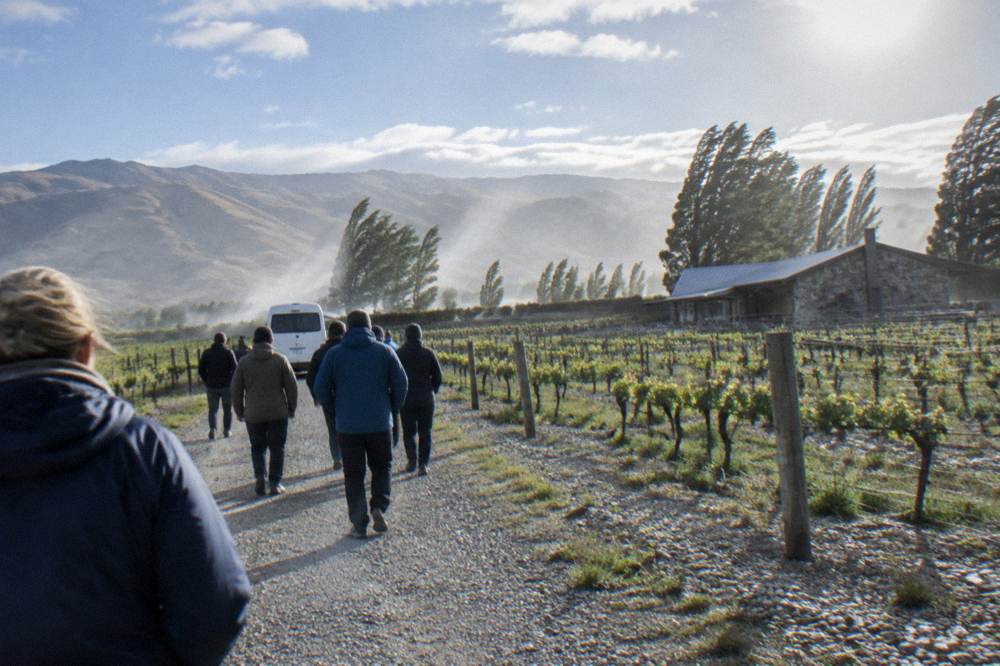
For shorter days, Discovery Wine Tours runs an afternoon option from Blenheim from $117.82 per person for 4 hours with up to 13 guests, a slightly larger cap than the 11 used on the full-day vans. Standard cellar door tasting experiences are included, along with an air-conditioned vehicle, a tour host with a passion for wine and Marlborough local history, and collection from your accommodation in Central Blenheim. The start towns explain why Blenheim dominates the options: it is the start point for 22 of the 32 tours, against 8 from Picton and 2 from Renwick. The region behind all of this is large, with about 32,000 hectares planted in vines according to the NZ Winegrowers Vineyard Report 2026, and Sauvignon Blanc making up 85 percent of plantings. With Sauvignon Blanc filling most glasses at those cellar doors, a common question on any tour is why it smells so ripe yet finishes dry, and why Marlborough Sauvignon Blanc tastes fruity but is made dry clears that up before the first pour.
When Is The Best Time To Visit Marlborough Wine Country?
The growing season is the best window: late spring through autumn. Summer delivers the about 2,500 sunshine hours the region averages a year, and the cruise season brings more than 30 ship calls to Picton between mid November and early April. Winter touring is possible, but many cellar doors cut their hours.
Timing shapes the experience more here than in some regions, because so much of a Marlborough visit happens outdoors: the riding between cellar doors, the vineyard lawns, the lunch stops. Spring is quieter and greener. Full seasonal detail is in the best time for a Marlborough wine tour.
If you are arriving on a ship, the season and the ports matter. Ships berth at Waimahara Wharf in Shakespeare Bay or at Waitohi Wharf in Picton Harbour, with a few small expedition ships anchoring at Ship Cove, and a day in port runs roughly from early morning to late afternoon. Shore-excursion wine tours from Picton run from $114.37 for a 3-hour half-day up to $186.78 for the port highlights tour, and several note they may not suit every ship's timing, so check your own berth schedule. There is a dedicated rundown in cruise ship wine shore excursions from Picton.
Winter visitors are not shut out, but they should plan around shorter cellar-door hours, which differ per winery and season. Wine Marlborough publishes a Cellar Doors and Tasting Rooms page and a Wine Trail Map, and the simple rule is to check the cellar door before going, especially in the colder months.
Whenever you go, the practical base is Blenheim or Renwick for the Wairau cellar doors, or Picton if you are ferry-connected or cruise-bound, and the two are a short drive apart on State Highway 1. The Full-Day Marlborough Wine Tour from Blenheim is a 7-hour day with tastings and lunch included, from $218.39 per person.
Common Questions About The Marlborough Wine Region
What Is The Marlborough Wine Region Known For?
It is known for Sauvignon Blanc, which fills 85 percent of its roughly 32,000 hectares of vines, 73 percent of New Zealand's vineyard area. Beyond the headline grape it is known for three subregions and a young history dating to 1973.
Where Is The Marlborough Wine Region?
At the top of New Zealand's South Island, between Cook Strait and the Pacific. The wine country centres on the Wairau Valley around Blenheim and Renwick, with the Southern Valleys nearby and the Awatere further south. Picton, the ferry port from Wellington, is a short drive away on State Highway 1.
What Percentage Of Marlborough Wine Is Sauvignon Blanc?
Sauvignon Blanc is 85 percent of Marlborough's plantings, according to Wine Marlborough. Pinot Noir is next at 7 percent, Pinot Gris at 4 percent and Chardonnay at 3.3 percent.
When Did Marlborough Start Making Wine?
Commercial planting began in 1973 at Brancott Estate. In 1985 the region had just four wine companies, and the boom that followed, driven by international demand for its Sauvignon Blanc, took it to about 32,000 hectares of vines.
How Much Of Marlborough Wine Is Exported?
More than 80 percent, according to Wine Marlborough. Export demand for Sauvignon Blanc is what built the region's scale.
Can You Tour Marlborough Wineries Without Driving?
Yes. Guided tours run from Blenheim and Picton, self-guided bike tours start from $39 per person, and a hop-on hop-off option from Picton runs from $80.17. With a legal purchase age of 18 and the usual choice being a designated driver or a guided tour, a tour removes the question.